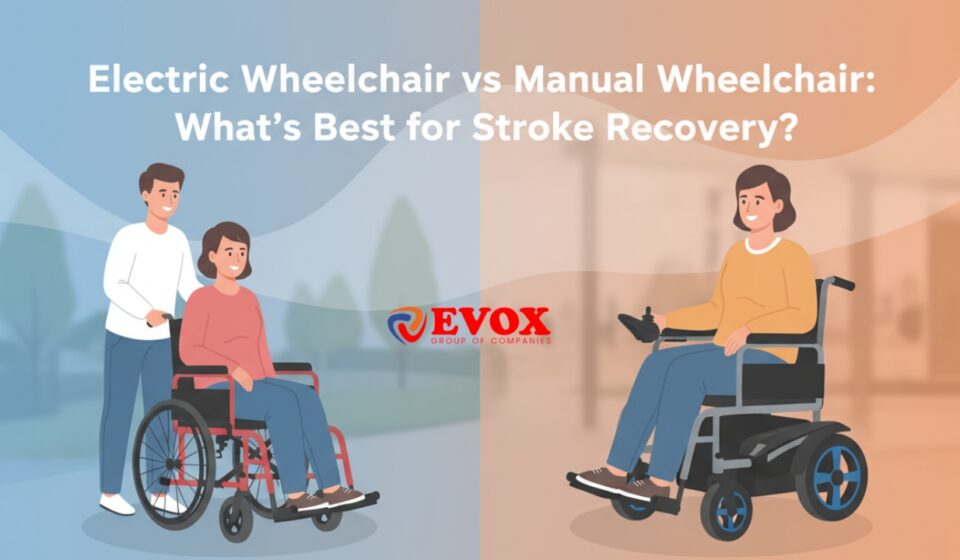

When Mrs. Sharma’s husband suffered a stroke last year, she found herself standing in a medical equipment store, overwhelmed by choices. “Should we get a manual wheelchair or invest in an electric one?” she wondered, worried about both his independence and their budget. If you’re facing this same difficult decision, you’re not alone.
Choosing the right wheelchair for stroke recovery isn’t just about mobility – it’s about dignity, independence, and hope for the future. The decision between a manual and electric wheelchair can significantly impact not just the patient’s quality of life, but also the entire family’s daily routine and emotional well-being.
This comprehensive guide will walk you through everything you need to know about both options, helping you make an informed decision that best serves your loved one’s recovery journey. Whether you’re looking for immediate support or long-term independence, we’ll explore which wheelchair type aligns with your specific needs and circumstances.
Ready to see our top recommendations? If you want to skip ahead to our Top 3 Evox Electric Wheelchair picks specifically designed for stroke patients, scroll down to section 7.
Why Choosing the Right Wheelchair Matters for Stroke Recovery
The aftermath of a stroke brings numerous challenges, but perhaps none more immediate than mobility limitations. According to recent studies, nearly 80% of stroke survivors experience some form of mobility impairment, making the choice of assistive device crucial for their recovery and mental health.
Limited mobility doesn’t just affect physical movement – it impacts every aspect of life. Stroke survivors often struggle with decreased independence, leading to feelings of frustration, depression, and social isolation. The right wheelchair can be the bridge between dependency and reclaiming one’s life.
Safety is another critical factor. Stroke patients frequently experience muscle weakness, balance issues, and fatigue. A poorly chosen mobility aid can increase fall risk and potentially cause additional injuries. On the other hand, the appropriate wheelchair provides stability, confidence, and the security needed to navigate daily activities safely.
The psychological impact cannot be understated. When stroke survivors can move around independently, even within their home, it significantly boosts their confidence and motivation for further recovery. This emotional lift often translates into better participation in physical therapy and faster overall rehabilitation progress.
For families seeking comprehensive guidance on wheelchair selection, our detailed guide on Best Wheelchairs for Stroke Patients in India provides additional insights into making the right choice for your specific situation.
Manual Wheelchair for Stroke Patients: The Traditional Choice
Manual wheelchairs have been the go-to mobility solution for decades, and for good reason. They offer several advantages that make them suitable for certain stroke recovery situations.
Advantages of Manual Wheelchairs
Affordability is perhaps the biggest draw. Manual wheelchairs typically cost between ₹8,000 to ₹25,000, making them accessible to most families facing the financial strain that often accompanies medical emergencies.
Lightweight and portable, most manual wheelchairs can be easily folded and transported in cars, making them ideal for families who need to travel frequently for medical appointments. They don’t require any power source, eliminating concerns about battery life or charging infrastructure.
Low maintenance is another significant benefit. Unlike electric models, manual wheelchairs have fewer components that can break down, resulting in lower long-term maintenance costs and greater reliability.
Immediate availability means you can purchase and start using a manual wheelchair the same day, without waiting for customization or delivery of specialized components.
Limitations to Consider
However, manual wheelchairs come with substantial limitations for stroke patients. Physical demands on the user can be overwhelming, especially for those with arm weakness or limited upper body strength – common post-stroke conditions.
Caregiver dependency becomes a major factor. Family members or hired caregivers must push the wheelchair, limiting spontaneous movement and creating a constant need for assistance. This dependency can be emotionally challenging for stroke survivors who value their independence.
Limited range restricts movement to areas where smooth surfaces exist and where a caregiver can safely navigate. Outdoor activities, uneven terrain, or longer distances become nearly impossible without significant physical effort from caregivers.
Fatigue factor affects both patient and caregiver. Even stroke survivors with some upper body strength often find manual propulsion exhausting, limiting their daily activities and social interactions.
Best Suited For
Manual wheelchairs work best for stroke patients who:
- Have strong upper body function and can self-propel short distances
- Require wheelchair use for a limited time during recovery
- Have dedicated, physically capable caregivers available most of the time
- Live in single-level homes with smooth flooring
- Have budget constraints that make electric options unfeasible
Electric Wheelchair for Stroke Patients: The Independence Solution
Electric wheelchairs represent a paradigm shift in mobility assistance, offering stroke patients unprecedented independence and freedom. Understanding their benefits and considerations helps families make informed decisions about this investment in quality of life.
Advantages of Electric Wheelchairs
Complete independence stands as the most compelling advantage. Stroke patients can move around their homes, gardens, and communities without requiring caregiver assistance. This independence often leads to improved mental health, increased social interaction, and better overall recovery outcomes.
Effortless operation accommodates various physical limitations. Most electric wheelchairs can be operated with minimal finger pressure on a joystick, making them suitable even for patients with significant arm weakness or limited dexterity.
Remote control capabilities add an extra layer of convenience and safety. Family members can operate the wheelchair remotely when needed, ensuring the patient’s safety while still promoting independence during appropriate times.
Indoor and outdoor versatility expands the patient’s world considerably. Quality electric wheelchairs can navigate different terrains, from household carpets to outdoor sidewalks, enabling stroke survivors to participate in family gatherings, shopping trips, and social activities.
Comfort features including cushioned seats, adjustable armrests, and proper back support help prevent pressure sores and provide the comfort needed for extended use. Many models also offer tilt and recline functions for optimal positioning.
Advanced safety features such as anti-tip mechanisms, automatic braking systems, and speed controls ensure user safety while building confidence in mobility.
Considerations and Limitations
Higher initial investment ranges from ₹45,000 to ₹2,50,000 depending on features and quality. While this represents a significant upfront cost, many families find the long-term benefits justify the investment.
Charging requirements mean establishing a routine for battery maintenance. However, modern electric wheelchairs offer 8-15 hours of use per charge, typically more than sufficient for daily needs.
Weight considerations make transportation more complex, though many newer models feature foldable designs and lighter materials to address this concern.
Learning curve exists for both patients and caregivers, though most users adapt to electric wheelchair operation within a few days of practice.
Best Suited For
Electric wheelchairs excel for stroke patients who:
- Have limited upper body strength or endurance
- Desire maximum independence in daily activities
- Live in homes with multiple levels or challenging layouts
- Want to maintain active social and community involvement
- Have family support for the initial investment and learning process
- Require long-term mobility assistance
For detailed information about specific electric wheelchair models ideal for stroke recovery, visit our comprehensive guide on Best Motorized Wheelchair for Stroke Patients.
Electric vs Manual Wheelchair: Comprehensive Comparison
| Feature | Manual Wheelchair | Electric Wheelchair |
| Initial Cost | ₹8,000 – ₹25,000 | ₹45,000 – ₹2,50,000 |
| Independence Level | Low (requires caregiver assistance) | High (complete self-operation) |
| Physical Demand | High (requires upper body strength) | Minimal (joystick operation) |
| Range of Movement | Limited to caregiver’s strength | Extensive (8-15 hours per charge) |
| Comfort Features | Basic cushioning | Advanced comfort and positioning |
| Terrain Capability | Smooth surfaces only | Indoor and outdoor versatility |
| Maintenance | Low | Moderate (battery and electrical) |
| Transportation | Easy (lightweight, foldable) | Moderate (heavier but many fold) |
| Recovery Benefit | Short-term mobility aid | Long-term independence tool |
| Suitable Duration | Temporary use | Extended or permanent use |
| Caregiver Impact | High physical demand | Reduced physical burden |
| Social Participation | Limited by caregiver availability | Enhanced by independent mobility |
This comparison clearly illustrates why the choice depends heavily on individual circumstances, recovery goals, and family resources.
Why More Stroke Survivors Are Choosing Electric Wheelchairs
The trend toward electric wheelchairs among stroke survivors reflects changing attitudes about disability, independence, and quality of life. Recent surveys indicate that 73% of stroke patients who switched from manual to electric wheelchairs reported significant improvements in their daily satisfaction and social engagement.
Dignity and self-respect play crucial roles in this preference. Many stroke survivors express that electric wheelchairs help them feel less like “patients” and more like individuals maintaining control over their lives. The ability to move independently, even within their homes, provides a sense of normalcy that’s often lost after a stroke.
Financial perspective reveals an interesting truth: while electric wheelchairs cost more initially, they often prove more economical long-term. Families spend less on caregiver assistance, and stroke survivors can participate more actively in their recovery programs, potentially reducing overall medical costs.
Social integration improves dramatically with electric wheelchairs. Patients can attend family functions, participate in community activities, and maintain friendships more easily when they’re not dependent on others for mobility. This social engagement directly correlates with better mental health and recovery outcomes.
Caregiver relief cannot be overlooked. Family members report significantly less physical strain and emotional stress when their loved ones use electric wheelchairs, leading to better relationships and more sustainable care arrangements.
Top 3 Best Evox Electric & Automatic Wheelchairs for Stroke Patients
Based on extensive research and customer feedback, these three Evox models stand out as exceptional choices for stroke recovery:
1. Evox WC-109A – Premium Automatic Folding Wheelchair
Key Features:
- Remote control operation for caregiver assistance when needed
- Automatic folding mechanism for easy transportation
- Premium cushioning with pressure-relief technology
- 15-hour battery life for all-day independence
- Weight capacity: 120kg
- Speed control with safety governors
Why It’s Perfect for Stroke Patients: The WC-109A combines independence with safety features that give families peace of mind. The remote control option allows gradual transition to full independence while maintaining caregiver oversight when necessary.
Investment: ₹1,85,000 (including warranty and home setup)
2. Evox WC-108 – Compact Daily Use Champion
Key Features:
- Ultra-compact design perfect for indoor navigation
- Lightweight aluminum frame (25kg total weight)
- 12-hour battery with quick-charge capability
- Adjustable armrests and footrests
- Anti-tip safety system
- Smooth joystick operation requiring minimal pressure
Why It’s Ideal: This model excels in home environments, easily maneuvering through doorways and tight spaces. The lightweight design doesn’t compromise on stability or comfort.
Investment: ₹95,000 (includes free home trial and setup)
3. Evox WC-107 – Affordable Excellence
Key Features:
- Outstanding value without compromising quality
- 10-hour battery life suitable for daily needs
- Robust construction with 100kg weight capacity
- Easy-to-use controls designed for limited dexterity
- Comfortable seating with lumbar support
- Reliable performance with minimal maintenance
Why It’s Great for Stroke Recovery: The WC-107 proves that quality electric mobility doesn’t require a premium budget. It offers essential features that support independence while remaining accessible to more families.
Investment: ₹65,000 (with extended warranty option)
Ready to Experience the Difference? Explore All Evox Electric Wheelchairs or contact us at +91-7696052635 for a free home demonstration.
Caregiver’s Perspective: Which Wheelchair Makes Life Easier?
From a caregiver’s standpoint, the choice between manual and electric wheelchairs significantly impacts daily routines, physical health, and emotional wellbeing. Understanding these differences helps families make decisions that benefit everyone involved.
Physical demands differ dramatically between the two options. Manual wheelchairs require caregivers to push, lift, and navigate, often leading to back strain, fatigue, and potential injury. Electric wheelchairs eliminate most physical demands, allowing caregivers to focus on emotional support and medical care rather than transportation logistics.
Time management improves considerably with electric wheelchairs. Caregivers can accomplish other tasks while patients move independently, making household management more efficient and reducing the feeling of being constantly “on duty.”
Emergency situations highlight important differences. With manual wheelchairs, caregivers must always be present and physically capable of moving the patient quickly if needed. Electric wheelchairs with remote controls provide more flexibility in emergency responses while maintaining patient dignity.
Emotional relief for caregivers shouldn’t be underestimated. Many report feeling less overwhelmed and more able to maintain positive relationships with their loved ones when physical care demands decrease. This emotional improvement benefits the entire family dynamic and supports better long-term care arrangements.
Sleep and rest quality for caregivers often improves when patients can move independently during night hours, reducing the need for assistance with basic mobility needs.
How to Choose the Right Wheelchair for Stroke Recovery
Selecting the optimal wheelchair requires careful consideration of multiple factors unique to each stroke survivor’s situation. This decision framework helps guide families through the selection process:
Assess Physical Capabilities
- Upper body strength: Can the patient push a manual wheelchair for short distances?
- Cognitive function: Is the patient able to safely operate an electric wheelchair?
- Vision and spatial awareness: Are there concerns about navigating safely?
- Hand function: Can the patient operate a joystick or require alternative controls?
Evaluate Home Environment
- Space limitations: Are doorways wide enough for wheelchair navigation?
- Flooring types: Do carpets, thresholds, or stairs present challenges?
- Accessibility features: Are ramps, accessible bathrooms, and wide hallways available?
- Charging locations: Are electrical outlets conveniently located for electric models?
Consider Recovery Goals
- Timeline: Is this expected to be temporary or long-term assistance?
- Independence objectives: How important is self-sufficient mobility to the patient?
- Activity participation: Does the patient want to engage in outdoor activities or community involvement?
- Therapy integration: How will the wheelchair support ongoing rehabilitation efforts?
Financial Planning
- Budget constraints: What can the family reasonably afford without financial strain?
- Insurance coverage: What mobility aids are covered by health insurance?
- Long-term costs: Have you factored in maintenance, repairs, and potential upgrades?
- Cost-benefit analysis: How do upfront costs compare to long-term caregiver expenses?
Trial and Testing
Before making a final decision, arrange for:
- Home demonstrations: Test wheelchairs in the actual living environment
- Extended trials: Use the wheelchair for several days if possible
- Professional consultation: Work with occupational therapists or mobility specialists
- Family discussions: Ensure all family members understand the chosen solution
Need Expert Guidance? Contact Evox for a complimentary home consultation where our mobility specialists will assess your specific needs and recommend the most suitable wheelchair options. Call +91-7696052635 to schedule your free evaluation.
Making the Right Choice: Your Path to Independence
The decision between electric and manual wheelchairs for stroke recovery ultimately comes down to prioritizing independence, safety, and quality of life. While manual wheelchairs serve important roles in short-term recovery or budget-conscious situations, electric wheelchairs consistently deliver superior outcomes for long-term mobility needs.
Consider this: stroke recovery is a marathon, not a sprint. The mobility aid you choose today will impact not just immediate needs, but months or years of daily life. Electric wheelchairs offer the independence that supports continued recovery, maintained social connections, and preserved dignity throughout the healing process.
The evidence is clear: stroke survivors using electric wheelchairs report higher satisfaction rates, better mental health outcomes, and greater participation in recovery activities. Families experience less caregiver burden and more positive interactions with their loved ones.
Your next step is simple: Don’t let mobility limitations define your loved one’s future. Evox electric wheelchairs are specifically designed for stroke patients, offering the perfect combination of safety, independence, and reliability that Indian families trust.
Ready to Transform Your Mobility Experience?
🔹 Book Your Free Home Demo – Experience the difference in your own environment
🔹 Call +91-7696052635 – Speak with our mobility specialists today
🔹 Shop Evox Wheelchairs Now – Browse our complete range with exclusive online offers
Your journey to independence starts with a single decision. Choose the mobility solution that honors your loved one’s strength, supports their recovery goals, and gives your entire family the freedom to focus on what matters most – healing, happiness, and hope for the future.
Frequently Asked Questions
Which is better for stroke recovery – manual or electric wheelchair?
Electric wheelchairs are generally superior for stroke recovery because they provide complete independence, reduce caregiver burden, and support long-term mobility goals. However, manual wheelchairs may be suitable for short-term use or patients with strong upper body function and dedicated caregiver support.
Is an electric wheelchair safe for elderly stroke patients?
Yes, modern electric wheelchairs include multiple safety features such as anti-tip mechanisms, speed governors, automatic braking, and remote control options. These features make them particularly safe for elderly stroke patients who may have balance or cognitive concerns.
What is the price of an electric wheelchair in India?
Electric wheelchairs in India range from ₹45,000 for basic models to ₹2,50,000 for premium features. Evox offers excellent value with models starting at ₹65,000, providing quality and reliability at accessible prices.
Can stroke patients use an automatic wheelchair without help?
Most stroke patients can independently operate electric wheelchairs using simple joystick controls that require minimal finger pressure. For patients with severe limitations, remote control options allow gradual transition to independent use.
Which is the best Evox wheelchair for stroke survivors?
The Evox WC-108 consistently receives top ratings from stroke patients and families for its perfect balance of features, reliability, and value. However, the best choice depends on individual needs, with the WC-109A offering premium features and the WC-107 providing excellent basic functionality at an affordable price.