
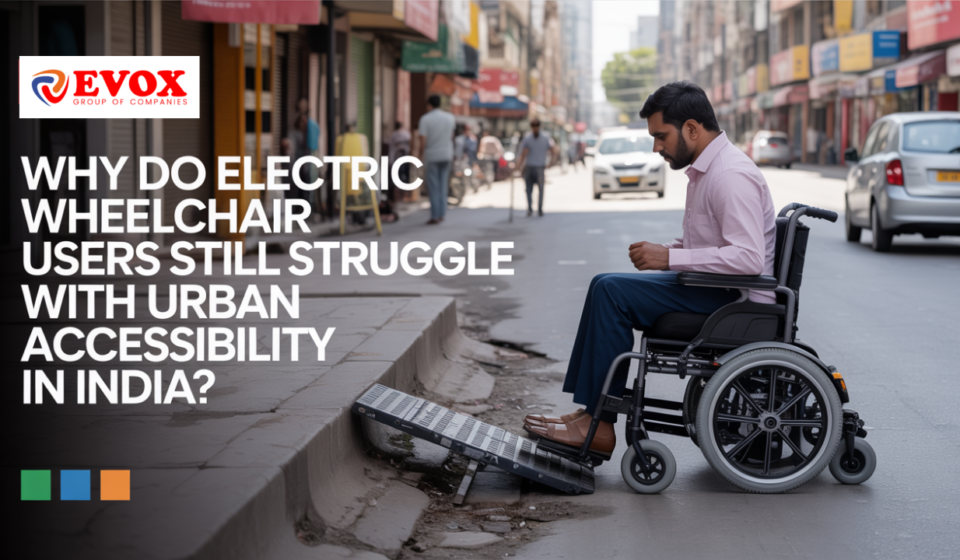

In many Indian cities, getting around might look simple — until you try doing it in a wheelchair. Take Ramesh, a 45-year-old accountant from Delhi. After months of saving, he finally bought his first electric wheelchair in India, hoping to travel independently. But on his first day to the office, his route was blocked by broken sidewalks, cars parked on footpaths, and a steep, uneven crossing. At the metro station, there was no working ramp, forcing him to wait for strangers to help lift his chair. His dream of freedom quickly turned into a frustrating struggle.
Sadly, Ramesh’s experience reflects the reality for many. According to government data, over 26 million people in India live with disabilities, yet most cities still lack wheelchair-friendly infrastructure. From missing ramps on busy streets to narrow shop entrances and inaccessible public transport, the challenges are constant. Even the best wheelchair technology cannot deliver true mobility without a supportive environment.
At Evox, we believe mobility means more than just movement — it’s independence, dignity, and opportunity. That’s why our electric wheelchairs are engineered for Indian urban conditions: sturdy enough for rough roads, compact for crowded spaces, and equipped with smart features to make life simpler. Our mission is clear — to break down barriers so every wheelchair user can navigate Indian cities with confidence and without limits.
The Reality of Urban Accessibility in India
Urban India is growing fast, but for electric wheelchair users, that growth hasn’t always meant progress. According to the Ministry of Social Justice and Empowerment, over 2.2% of India’s population lives with disabilities — that’s more than 26 million people. Yet, a recent survey by a leading NGO found that less than 25% of public buildings in major cities are truly wheelchair accessible.
Everyday movement is filled with obstacles. In many areas, footpaths are broken, blocked by vendors, or completely missing, forcing wheelchair users to travel on busy roads — a major safety risk. Public buses and autos rarely have ramps or low floors, making independent boarding almost impossible. Even metro stations, which promise accessibility, often have lifts that are out of service or ramps that are too steep to use safely. Crossing a busy intersection can feel like a dangerous game, with no tactile paving, poor signals, and vehicles that don’t stop.
These gaps mean that even if someone owns a lightweight folding electric wheelchair or a motorized wheelchair designed for Indian roads, their mobility is still limited by the city’s infrastructure.
Accessibility expert Meera Kapoor from the Centre for Inclusive Mobility puts it simply:
“Mobility is not just about having the right wheelchair — it’s about creating an environment where that wheelchair can take you anywhere without fear or dependence.”
At Evox, we design our electric wheelchairs with this reality in mind. From extra-strong motors for uneven paths to compact folding designs for easy transport, our goal is to help users overcome as many of these urban barriers as possible — until the day cities themselves become fully accessible.
Top Problems Wheelchair Users Face in Indian Cities
Urban life in India should be full of possibilities — but for many wheelchair users, it’s a daily struggle. Here are some of the most common challenges that hold back mobility and independence.
1. Broken or Missing Footpaths
Many city sidewalks are uneven, blocked, or don’t exist at all. This forces wheelchair users onto crowded roads, putting them in constant danger from traffic. Even the most advanced motorized wheelchairs face risks when the path ahead is unsafe.
2. Public Transport Barriers
Buses without ramps, trains with steep steps, and metro lifts that don’t work make independent travel difficult. A wheelchair user shouldn’t have to depend on others just to get from one station to another.
3. Untrained Assistance Staff
Even when facilities exist, staff at stations, malls, or airports are often untrained in how to help wheelchair users safely. This leads to delays, discomfort, and in some cases, injuries. (Read our guide on Untrained Assistance Staff and why it matters.)
4. Inaccessible Crossings and Signals
Poorly designed zebra crossings, missing tactile paving, and no traffic control for pedestrians make crossing roads unsafe, especially for seniors or those with limited upper body strength.
At Evox, we believe no one should be stopped by poor design. Our lightweight folding electric wheelchairs are built to handle rough paths, narrow spaces, and quick folding for taxis or cars — making urban travel less of a challenge.
Why Evox Electric Wheelchairs Are Changing Mobility in India
For decades, manual wheelchairs have been the default option in India. They work — but they also require constant physical effort or help from someone else. This means many users face limited independence, especially when navigating long distances, crowded streets, or rough terrain.
Electric wheelchairs change everything. With motorized power and intuitive controls, they give users the ability to move independently without strain or dependency. In a country where travel often involves broken pavements, steep ramps, and busy markets, this shift is life-changing.
Key benefits of electric wheelchairs for Indian conditions:
-
Effortless Travel: Glide over rough roads and climb ramps without physical strain.
-
Longer Rides: Cover several kilometers without fatigue.
-
Quick Maneuvering: Navigate narrow lanes, crowded footpaths, and tight entrances with ease.
-
Enhanced Safety: Stable controls and responsive brakes reduce accident risks.
One standout option is the Evox WC-109A — lightweight, foldable, and tailored for Indian roads. Whether you’re boarding a metro, catching a train, or fitting it into a car boot, it adapts seamlessly. Its powerful battery, ergonomic seating, and travel-friendly design make every journey comfortable and stress-free.
With the right electric wheelchair, mobility becomes freedom — not a struggle. Evox is committed to ensuring every ride is smoother, safer, and truly independent.
How Evox Electric Wheelchairs Remove Everyday Barriers
In India, wheelchair users often face steep ramps, pothole-filled streets, and inaccessible public spaces. Evox designs electric wheelchairs to turn those challenges into everyday victories.
Here’s how:
-
Lightweight & Foldable: Models like the WC-109A fold in seconds, making them perfect for travel and easy storage.
-
Long-Lasting Battery: Reliable power for full-day commutes without mid-journey recharging worries.
Smooth Ride on Indian Roads: Shock-absorbing wheels and sturdy frames handle uneven surfaces with ease.
-
User-Friendly Controls: Joystick navigation that even first-time users can master in minutes.
-
All-Day Comfort: Cushioned seating, adjustable footrests, and ergonomic design for pain-free travel.
Real Story – Ramesh, 62, Delhi:
“Before Evox, I needed someone to push me everywhere. Now I walk to the park in the evenings on my own. It’s freedom I never thought I’d have again.”
Evox isn’t just about selling electric wheelchairs — it’s about restoring independence, dignity, and confidence to every user. Our mission is clear: make mobility limitless for everyone.
The Role of Policy & Awareness in Urban Accessibility
India has strong disability rights laws — on paper. The Rights of Persons with Disabilities (RPwD) Act, 2016 promises equal opportunities and accessible infrastructure for everyone. The Accessible India Campaign (Sugamya Bharat Abhiyan) was launched to make public spaces, transport, and digital services barrier-free.
But in reality, progress is slow. Many public buildings still don’t have ramps, buses with wheelchair lifts are rare, and footpaths are often broken or blocked by vehicles. This gap between policy and real-life accessibility forces many wheelchair users to depend on personal solutions rather than public support.
This is why awareness is key. When more people understand mobility challenges, there’s stronger pressure on authorities to make real changes.
At Evox, we fully support these national policies — but we also know that waiting for perfect infrastructure shouldn’t mean waiting for freedom. That’s why our Evox electric wheelchairs are built for real Indian conditions: strong enough for uneven roads, compact for crowded spaces, and reliable for daily commuting.
While we keep advocating for an accessible India, we make sure you can move independently, safely, and confidently — starting today.
How to Choose the Best Electric Wheelchair for City Use
When it comes to navigating busy Indian cities, your wheelchair needs to be more than just comfortable — it must be practical, portable, and road-ready. Here are the five key features you should check before buying:
- Portability & Folding Mechanism – A lightweight, foldable wheelchair like the Evox WC-109A is easier to carry in cars or store in tight spaces.
- Battery Life – Look for long-lasting batteries that can handle a full day’s travel. Models like the Evox WC-108 are built for extended use.
- Comfort Features – Adjustable armrests, padded seats, and ergonomic design are essential for daily use in traffic and uneven roads.
- Wheel & Suspension Quality – Large, sturdy wheels and good suspension make a big difference on Indian roads. The Evox WC-104R offers a smooth ride even on bumpy paths.
- Control System – A responsive joystick ensures easy maneuvering in crowded markets and narrow lanes.
Tip: Always test-drive the model before purchase. Make sure it’s easy to fold, comfortable to sit in, and smooth to drive on real city roads.
Choosing the right wheelchair isn’t just about mobility — it’s about freedom, confidence, and independence. Evox makes sure you get all three.
Take the First Step to Mobility Freedom
Life is too short to let mobility challenges hold you back. Whether it’s visiting your favorite park, meeting friends, or traveling to work — Evox Electric Wheelchairs make it possible with comfort, safety, and independence built in.
Every day you wait is a day you miss out on the freedom you deserve. Our wheelchairs are lightweight, foldable, and designed for Indian roads — so you can move without limits
Don’t wait for “someday.” Make today the day you take back your independence with Evox.
FAQ – Evox Electric Wheelchairs in India
Q: Can I use an electric wheelchair on Indian roads?
Yes! Many Evox models are designed for uneven surfaces, potholes, and speed breakers. Just avoid heavy traffic lanes and stick to pavements where possible.
Q: How do I travel in a metro or train with a wheelchair?
Plan ahead. Use accessible stations, inform staff in advance, and opt for foldable models like Evox WC-109A for easy entry and storage.
Q: What’s the best way to cross busy streets?
Use pedestrian crossings and foot overbridges wherever possible. If assistance is needed, don’t hesitate to ask — most people are willing to help.
Q: How do I keep my wheelchair battery charged while out?
Carry the charger with you and look for public charging points at malls, metro stations, or offices. Evox batteries charge quickly for added convenience.
Q: Is an electric wheelchair safe for crowded areas?
Yes, with proper control and awareness. Keep your speed low and joystick steady when moving through crowds.
Evox wheelchairs are built for real Indian conditions, so you can move through your city with ease and confidence.