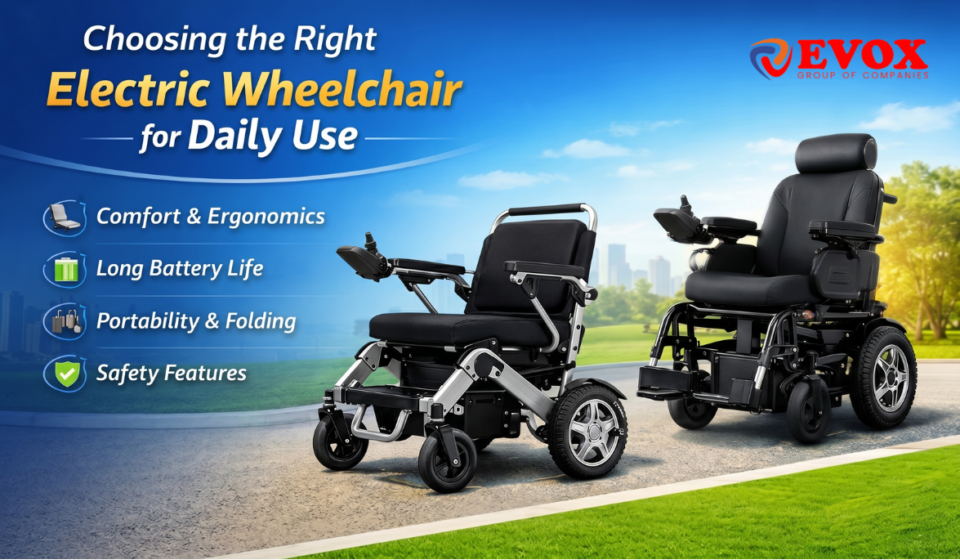

Choosing an electric wheelchair (or powerchair) is one of the most significant investments in personal independence a person can make. Unlike a manual chair, an electric model is a complex piece of machinery designed to serve as an extension of the user’s body. For daily use, the “perfect” chair isn’t just about the fastest motor or the plushest cushion; it’s about the synergy between the user’s physical needs, their environment, and their lifestyle.
Also Read: Electric Wheelchair Dealers in Chandigarh – Complete Buying Guide (2026)
1. Assess Your Primary Environment
Before looking at technical specs, look at your surroundings. Where will the chair spend 90% of its time?
-
Indoor Use: If you live in an apartment or a home with narrow hallways, focus on the turning radius. Mid-wheel drive chairs are often the gold standard here, as they can rotate on their own axis, making tight bathroom turns much easier.
-
Outdoor Use: If you frequent parks, gravel paths, or uneven sidewalks, you need a chair with robust suspension and larger drive wheels. Front-wheel or rear-wheel drive models often handle curbs and bumps with more stability than mid-wheel counterparts.
-
Thresholds and Terrains: Check the “ground clearance.” A low clearance is great for stability but can cause the chair to bottom out on door thresholds or uneven pavement.
2. Understanding Drive Types
The “drive” refers to where the motors and main wheels are positioned. This fundamentally changes how the chair handles:
-
Center/Mid-Wheel Drive: Extremely intuitive to drive. Because the center of gravity is over the drive wheels, it feels very natural. Ideal for indoor precision.
-
Front-Wheel Drive: Great for climbing obstacles and handling grass or soft ground. However, they have a larger rear-end “swing,” which takes practice to navigate around furniture.
-
Rear-Wheel Drive: These are the “tractors” of the powerchair world. They offer great high-speed stability and tracking (keeping a straight line), making them excellent for long-distance outdoor travel.
3. Comfort and Postural Support
Since a daily-use wheelchair is where you may spend 12 to 16 hours a day, seating is not an area to compromise.
-
The Cushion: Beyond comfort, cushions are about pressure redistribution. If you have limited sensation, a high-end foam, gel, or air-cell cushion (like Roho) is vital to prevent pressure sores.
-
Power Positioning: For daily users, features like Power Tilt (tilting the whole seat back) and Power Recline are essential. They allow for weight shifts throughout the day, improving circulation and reducing fatigue.
-
Seat Elevators: While often considered an “add-on,” a seat elevator allows you to reach high cabinets or speak to people at eye level, significantly improving social interaction and home independence.
4. Portability vs. Durability
This is the classic trade-off.
-
Folding/Travel Chairs: These are lightweight and fit into a car trunk. They are excellent for occasional trips, but for heavy daily use, they may lack the battery range and advanced postural support needed for long-term health.
-
Full-Size Powerchairs: These require a wheelchair-accessible vehicle (WAV) or a hitch-mounted lift. While less “portable,” they offer superior motor longevity, better suspension, and more customizable electronics.
5. Battery Life and Range
For daily use, “range anxiety” is real. Most standard Electric Wheelchairs offer between 15 to 20 miles on a full charge. However, factors like user weight, inclines, and the age of the battery will affect this. If you are an active user who spends the whole day out on the town, look for models that allow for upgraded, high-capacity batteries.
6. Controls and Electronics
The joystick is the brain of the operation. Standard joysticks work for most, but if you have limited hand dexterity, you might need:
-
Alternative Inputs: Head arrays, chin joysticks, or “sip-and-puff” systems.
-
Expandable Electronics: If your condition is progressive, ensure the chair’s computer system can be upgraded later to handle specialized controls or power seating functions.
Technical Specifications Table For Electric Wheelchair
| Feature | Importance for Daily Use | Recommended Choice |
| Turning Radius | High (Indoor Navigation) | < 25 inches |
| Battery Range | High (Independence) | 15+ Miles |
| Weight Capacity | Critical (Safety) | Must exceed user weight by 20% |
| Suspension | Medium (Comfort) | Active or Independent Suspension |
Conclusion
Choosing the right electric wheelchair is a journey toward reclaiming your time and energy. It requires a balance between the mechanical capabilities of the machine and the biological needs of the user. By prioritizing seating comfort, drive-wheel configuration, and battery reliability, you can find a mobility solution that doesn’t just move you from point A to B, but enhances your quality of life.
For those seeking a blend of durability, advanced technology, and ergonomic design, an Evox Wheelchair is an excellent choice for daily use. Known for their reliability in various terrains and user-friendly interfaces, Evox models provide the stability and comfort necessary for a seamless transition into a more mobile lifestyle.
FAQs
1. What is the average electric wheelchair price in India in 2026?
The price typically ranges from ₹50,000 to ₹2,50,000 depending on features, battery type, and brand.
2. Which is the best wheelchair for elderly people?
Automatic and foldable electric wheelchairs with simple controls and comfortable seating are ideal for elderly users.
3. Are folding power wheelchairs good for travel?
Yes, folding power wheelchairs in India are lightweight, portable, and perfect for frequent travelers.
4. How long does a battery powered wheelchair last on a single charge?
Most models offer a range of 15–25 km, depending on battery capacity and terrain.
5. Can I buy an electric wheelchair online in India?
Yes, many trusted brands offer online purchasing options with home delivery and service support.
Also Read: Which Is the Best Electric Wheelchair for a Disabled Person in 2026?